
For more than two years, skeptics had started writing the Quad’s obituary. After the September 2024 summit in Delaware, scheduling roadblocks wiped out India’s planned 2025 hosting slot, leaders changed in Washington and Tokyo, and global attention drifted toward hot wars and tariff fights.
On Tuesday evening in Manila, the four nations—the United States, India, Japan, and Australia—proved the rumors of the Quad’s demise were premature.
Meeting at the Solaire Resort on the sidelines of the ASEAN summits, U.S. President Donald Trump, Indian Prime Minister Narendra Modi, Japanese Prime Minister Sanae Takaichi, and Australian Prime Minister Anthony Albanese held their first leader-level gathering in over two years. It was also the first Quad summit held in a non-Quad country, and the first attended by both Trump in his second term and Takaichi as Japan’s premier.
Four Concrete Outcomes—Not Just Diplomatic Warmth
Yes, the cameras caught plenty of banter. Trump called Modi a “very tough man,” joked that Takaichi “may be even tougher,” and told reporters that “Albanese and me are okay.” But strip away the soundbites, and the actual deliverables announced in Manila point to a sharper, more industrial Quad. The summit locked in four core tracks:
- An $85M+ “Super Intelligence” AI Push: The four nations launched a new Quad Super Intelligence (SI) Accelerator backed by more than $85 million to expand trusted AI ecosystems across the Indo-Pacific. Trump framed the goal bluntly: keeping critical AI technology in the hands of countries with shared values and interests.
- Breaking Rare-Earth Dependency: Without naming China directly, the leaders unveiled new critical-mineral agreements designed to stop any single foreign supplier from coercing their economies. Trump went a step further ahead of the talks, claiming the U.S. is poised to catch China in rare-earth production “within 10 months.”
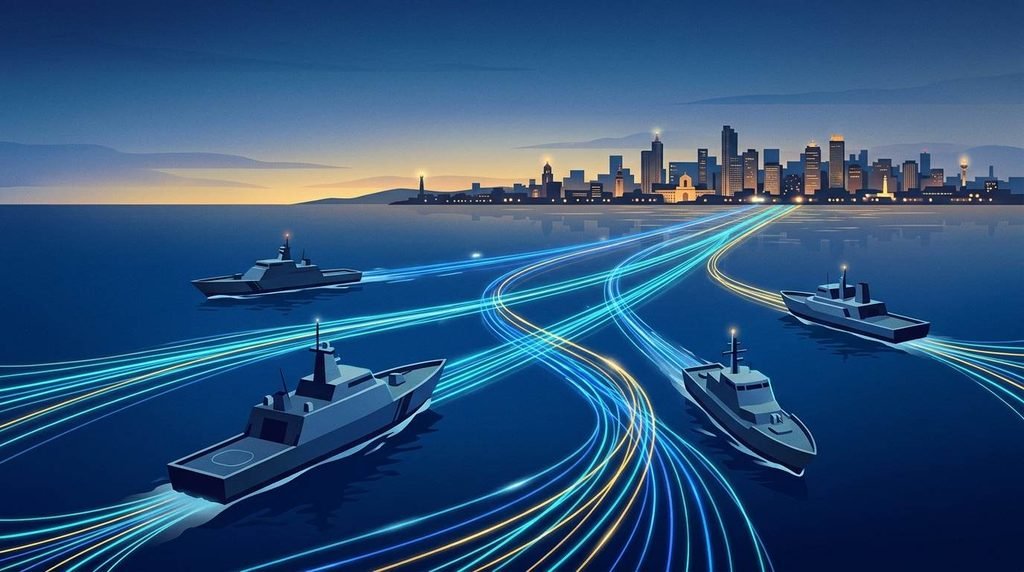
- Joint Maritime Patrols and Intelligence: Building on the 30th annual Malabar naval drills near Japan, the Quad announced a new joint exercise featuring maritime patrol aircraft alongside its Maritime Intelligence Sharing Corporation to track contested sea lanes.
- Cyber Defense & Business Ties: Leaders committed to deeper cybersecurity intelligence-sharing to shield critical infrastructure, while Australian PM Albanese and Trump confirmed the inaugural Quad Business Leaders’ Forum will convene in 2027—the same year Australia takes over the Quad chairship.
Manila’s Full-Circle Moment for India
For New Delhi, holding the summit in the Philippines carried a quiet irony. After failing to host the 2025 edition at home, India leaned into Manila’s history instead. PM Modi reminded the room that Quad officials first met in Manila in 2007 and restarted their dialogue in the very same city in 2017, calling the grouping a “constructive and trusted partnership” focused on practical solutions rather than rigid military alliances.
That distinction matters for India’s strategic autonomy. While Washington and Canberra emphasized “peace through strength” and joint maritime patrol plans, India continues to pitch the Quad as a provider of public goods—trusted supply chains, disaster response, and resilient tech—rather than an Asian NATO.
The Elephant in the Room: What Happens in Shenzhen
Of course, no summit happens in a vacuum. Outside the venue in Manila, protesters rallied against Trump over the ongoing Iran war and U.S. AI pacts, while Albanese noted ahead of the meeting that he would press Trump to end the Iran conflict because of its severe global energy shocks.
More importantly, the Manila handshake was a warm-up act for what comes next. Later this week, Trump heads to Shenzhen, China, for a closely watched November 19 trilateral summit with Chinese President Xi Jinping and Russian President Vladimir Putin, and Albanese will meet Xi on Friday. By locking in rare-earth deals, AI funding, and maritime drills in Manila first, the Quad leaders made sure they weren’t walking into Beijing’s orbit empty-handed.
If 2024 was about keeping the Quad alive, November 2026 in Manila was about giving it teeth—not just on the water, but in the chips, minerals, and algorithms that will decide the next decade in the Indo-Pacific.