
India, a land of unparalleled diversity, offers an extraordinary tapestry of experiences for every traveler. From the majestic peaks of the Himalayas to the tranquil backwaters of Kerala, the vibrant culture, rich history, and breathtaking landscapes make it one of the most sought-after travel destinations in India for a global audience. This guide explores some of the top places to visit, providing insights and practical advice to help you plan an unforgettable journey through this incredible country.
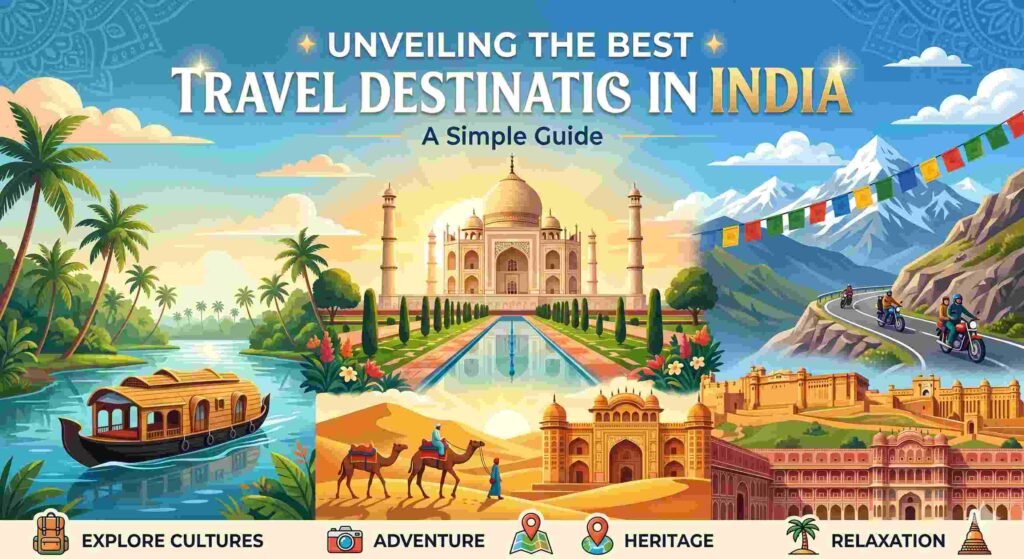
Table of Contents
Introduction to India’s Diverse Charms
Top Travel Destinations in India
The Golden Triangle: A Classic Introduction
Rajasthan’s Royal Grandeur: Palaces and Deserts
Kerala: God’s Own Country
Goa: Sun, Sand, and Serenity
Varanasi: India’s Spiritual Heart
Ladakh: Himalayan Adventures
Planning Your Journey: Essential Travel Tips for India
Frequently Asked Questions (FAQ)
Introduction to India’s Diverse Charms
India is a subcontinent brimming with ancient traditions, diverse religions, architectural marvels, and natural wonders. Its unique blend of modernity and heritage captivates millions of visitors annually, offering everything from bustling metropolises to serene spiritual retreats and adventurous escapades. Exploring the myriad travel destinations in India promises a journey filled with vibrant colors, captivating sounds, and unforgettable moments that cater to every interest and preference.
Top Travel Destinations in India
To truly experience the essence of India, consider these iconic destinations that showcase the country’s incredible diversity.
- The Golden Triangle: A Classic Introduction
Often considered the quintessential Indian experience for first-time visitors, the Golden Triangle circuit connects three historically significant cities: Delhi, Agra, and Jaipur. This well-trodden route forms an almost-equilateral triangle on the map, offering a glimpse into India’s imperial past, architectural brilliance, and vibrant bazaars.
Delhi: As the capital, Delhi is a living museum where ancient monuments stand alongside a bustling modern metropolis. Explore the Red Fort, Qutub Minar, India Gate, and the spiritual Lotus Temple. Don’t miss the vibrant street food and markets of Old Delhi, such as Chandni Chowk.
Agra: Home to the iconic Taj Mahal, Agra is a must-visit. This UNESCO World Heritage site, an eternal symbol of love, is best witnessed at sunrise or sunset for a truly magical experience. Other significant sites include Agra Fort and Fatehpur Sikri.
Jaipur: Known as the “Pink City” due to its distinctive pink-hued buildings, Jaipur exudes royal regality. Highlights include the majestic Amer Fort, the intricate Hawa Mahal (Palace of Winds), the City Palace, and the astronomical observatory Jantar Mantar.
- Rajasthan’s Royal Grandeur: Palaces and Deserts
Beyond the Golden Triangle, the state of Rajasthan offers a captivating journey through royal history and stunning desert landscapes. This “Land of Maharajas” is filled with colorful cities, ancient forts, and extravagant palaces.
Udaipur: Often called the “City of Lakes” or the “Venice of the East,” Udaipur enchants with its shimmering artificial lakes and magnificent palaces set against the Aravalli Hills. Key attractions include the City Palace and tranquil Lake Pichola.
Jodhpur: The “Blue City” charms visitors with its indigo-hued houses and the awe-inspiring Mehrangarh Fort, one of India’s largest forts.
Jaisalmer: Explore the “Golden City” and its massive ancient fort, Jaisalmer Fort, before embarking on a camel safari into the surrounding Thar Desert.
- Kerala: God’s Own Country
Located in the far South of India, the tropical state of Kerala is renowned as “God’s Own Country” for its serene backwaters, lush greenery, and pristine beaches. It offers a more relaxed pace of Indian life.
Backwaters: A houseboat cruise along Kerala’s tranquil backwaters is an iconic experience, allowing you to witness local life along the waterways.
Beaches: Enjoy the tropical coastline, with popular spots like Kochi offering stunning colonial architecture and a charming arts and culture scene.
Tea Plantations: Explore the rolling tea plantations in the hill stations, providing picturesque landscapes and a refreshing climate.
- Goa: Sun, Sand, and Serenity
For those seeking beach holidays and a vibrant atmosphere, Goa is an ideal destination. This small state on the west coast is famous for its gorgeous beaches, pulsating nightlife, and unique fusion of Indian and Portuguese culture.
Beaches: From lively stretches like Baga and Calangute to more secluded coves, Goa’s coastline offers something for every preference.
Portuguese Heritage: Discover historic whitewashed churches and colonial architecture, reflecting its rich past.
Markets: Explore colorful hippie markets, enjoy waterfalls, and visit spice plantations for a diverse experience.
- Varanasi: India’s Spiritual Heart
Varanasi, one of the world’s oldest continuously inhabited cities, is India’s spiritual capital, nestled on the banks of the sacred River Ganges. It offers a profound cultural and spiritual experience.
Ghats: Witness the ancient rituals and ceremonies performed at the numerous ghats (steps leading to the river), particularly the mesmerizing Ganga Aarti.
Spirituality: Immerse yourself in the intense spiritual atmosphere, where life and death are celebrated with equal reverence.
- Ladakh: Himalayan Adventures
Known as the “Rooftop of the World,” Ladakh is a dream destination for adventure lovers and nature enthusiasts. Located in the northernmost part of India, it boasts stark landscapes, towering mountain ranges, crystal-clear lakes, and ancient Buddhist monasteries.
Adventure Sports: Engage in trekking, motorbiking through high mountain passes like Khardung La, and river rafting.
Monasteries: Explore serene monasteries like Thiksey and Hemis, which are vital centers of Buddhist culture.
Pangong Lake: Visit the breathtaking Pangong Tso, a high-altitude lake renowned for its stunning blue waters.
Planning Your Journey: Essential Travel Tips for India
Traveling to India can be an enriching experience, but proper preparation is key. Here are some practical insights and actionable advice for a smooth trip:
Visa Requirements: Most foreign nationals require a visa to enter India. It is highly recommended to apply for an Indian e-Visa well in advance of your departure to simplify the process.
Best Time to Visit: The cooler, drier months between October and March are generally considered the best time to visit most travel destinations in India, avoiding the intense heat and monsoon season.
Health and Safety:
Water: Always drink bottled or purified water to avoid illness, even when brushing your teeth.
Dress Code: Dress modestly, especially when visiting religious sites. Loose-fitting clothing that covers shoulders, cleavage, and knees is recommended and also helps to keep you cool in the heat.
Food: Embrace the diverse Indian cuisine, but choose reputable eateries and ensure food is freshly cooked.
Transportation: India has an extensive network of trains, buses, and domestic flights. Booking trains in advance is crucial as they sell out quickly. For local travel, ride-sharing apps and licensed auto-rickshaws are convenient.
Embrace the Chaos: India can be overwhelming with its crowds, traffic, and vibrant energy. Adopt a flexible mindset, embrace the unexpected, and go with the flow to truly appreciate the country’s unique charm.
Travel Insurance: Purchase comprehensive travel insurance before your trip for peace of mind.
Local SIM Card: Consider getting a local SIM card or an international data plan for easier navigation and communication.
Frequently Asked Questions (FAQ)
Q1: Is India safe for solo female travelers?
A1: India can be safe for solo female travelers with proper precautions. It’s advisable to research destinations thoroughly, dress modestly, avoid traveling alone at night, use trusted transportation, and inform someone of your itinerary. Many women have incredibly rewarding solo travel experiences in India.
Q2: What are some good secondary keywords for planning a trip to India?
A2: Effective secondary keywords include “India travel packages,” “best time to visit India,” “Indian culture tours,” “adventure travel India,” “spiritual journeys India,” “beach holidays India,” “historical sites India,” “India e-visa,” and “luxury India tours”.
Q3: How much time should I allocate for a trip to India?
A3: To experience a few key regions, a minimum of 2-3 weeks is recommended. For a comprehensive exploration of specific circuits like the Golden Triangle, 5-7 days are usually sufficient. However, India’s vastness means you could easily spend months discovering its wonders.
Q4: What are some unique cultural experiences in India?
A4: Unique cultural experiences include participating in a local festival like Diwali or Holi, attending a yoga and meditation retreat in Rishikesh, taking a cooking class to learn Indian cuisine, watching traditional dance performances, or exploring local markets and interacting with artisans.
Q5: What currency is used in India, and should I carry cash?
A5: The currency used in India is the Indian Rupee (INR). While digital payments are becoming more common, it’s advisable to carry a mix of cash and cards, especially when visiting smaller towns or local markets. ATMs are widely available in major cities.
Conclusion
India truly offers a journey like no other, a sensory feast that promises to leave an indelible mark on your soul. From the historical grandeur of the Golden Triangle to the serene backwaters of Kerala, and the adventurous Himalayas of Ladakh, the diverse travel destinations in India cater to every preference. By embracing its vibrant culture, preparing thoughtfully, and staying open to new experiences, you are set for an adventure that will broaden your horizons and create cherished memories. Embark on your Indian odyssey and discover why this incredible nation continues to captivate travelers worldwide.