
The Sequencing Secret
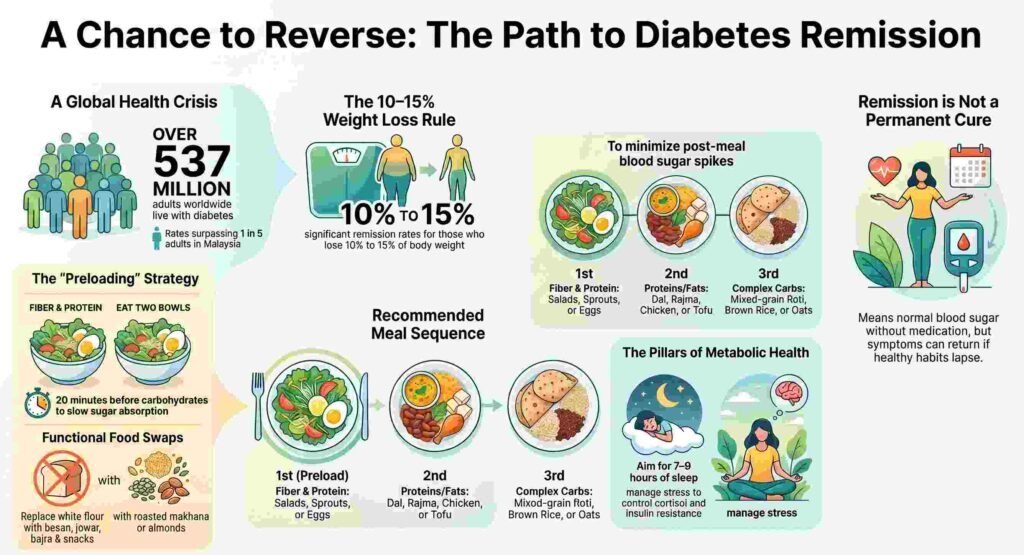
Receiving a Type 2 diabetes diagnosis in our hyper-accelerated world often feels like a life sentence to deprivation. The numbers are undeniably staggering: globally, over 537 million adults were living with diabetes as of 2021, and in Malaysia, the crisis has hit a fever pitch with more than one in five adults affected.
But here is the journalistic truth that the “starvation diet” myths hide: managing diabetes is not a punishment. It is a sophisticated, strategic lifestyle shift focused on metabolic flexibility. By mastering the quality, quantity, and specific sequence of your intake, you can move beyond mere survival and toward the ultimate goal of reclaiming your metabolic health.
Reversal is Real (But “Remission” is the Goal)
While the media often touts “reversal,” clinical authority Dr. Anoop Misra notes that remission is the more accurate objective. Remission is defined as achieving normal blood sugar levels without the aid of medication or insulin.
Data from a landmark 2018 UK study proves that this isn’t just wishful thinking—it is a biological possibility, especially for those recently diagnosed.
- The Weight Threshold: Remission is most frequently triggered by a 10–15% reduction in total body weight.
- The Success Gap: While the study showed a 60% success rate for remission after one year, that number dropped to 20% over five years. This highlights that while the body can heal, maintenance requires a permanent lifestyle commitment.
- The Long-Term Dividend: Dr. Misra remains an advocate for the effort: “Even if remission lasts for five years, it is very beneficial.”
The “Metabolic Sequencing” Hack (Sequence Matters)
One of the most powerful tools in a wellness strategist’s arsenal isn’t a new drug; it’s a timing tactic based on Japanese research. Metabolic sequencing—the order in which you eat your food—can produce significant glycemic dampening, dropping post-meal sugar levels by 30 to 50 points without changing a single calorie.
To implement this, utilize the 20-minute salad rule: consume two bowls of fiber-rich vegetables (cucumber, tomato, radish, or cabbage) 20 minutes before your main starch. This creates a “fiber buffer” or “net” in the intestine that slows sugar absorption. If you are eating rice, apply a double preload: consume 3 to 4 spoons of dal or rajma immediately before the rice. By separating these groups instead of eating them simultaneously, you fundamentally change how your body reacts to carbohydrates.
Don’t Exile the Roti (Upgrade the Quality)
The belief that you must banish rice and rotis is a myth we need to retire. Instead, we focus on “good calories” over “empty calories” (like sugary sodas or processed snacks). Food must remain a pleasure; in fact, Dr. Misra suggests that even homemade besan or wheat laddus can be enjoyed on weekends if your sugar is well-controlled.
Swaps for Success
- The Flour Upgrade: Stop using pure white wheat. Mix your wheat flour with besan (gram flour), jowar, and bajra to increase protein and complex carbs.
- The Rice Pivot: Replace white rice with parboiled or brown rice for a lower glycemic effect.
- The “Super Veggie” Addition: Incorporate bhindi (okra) three times a week and jackfruit whenever available; both have shown significant promise in blood sugar control.
- Smart Snacking: Ditch the trans-fat-laden packaged biscuits. Opt for natural snacks like roasted chana, roasted makhana, almonds, or pistachios.
The Protein-First Breakfast
Your morning routine dictates your energy stability for the entire day. Dr. Misra identifies eggs as the “best protein,” recommending the whole egg (yolk included) to maintain satiety.
For a blood-sugar-stable morning:
- Vegetarian Power: Use besan cheela, sprouts, or oats.
- The Curd Factor: Do not stop eating curd; simply ensure it is low-fat to support gut health.
- The Myth-Busting Opening: Dismiss the modern trend of complex “herbal concoctions” that claim to cure diabetes. Authority lies in simplicity: the best opening sequence is a simple tea (minimal sugar) paired with a few almonds. This stabilizes the system without the need for unproven tinctures.
Root Causes Beyond the Plate
Functional medicine teaches us that high blood sugar is a symptom, not the root cause. To achieve lasting remission, we must look at the systemic contributors to insulin resistance.
“Functional medicine focuses on identifying and addressing the root causes of diabetes, rather than simply treating high blood sugar.”
The pillars of metabolic health include:
- Stress Management: High cortisol levels are a direct enemy of glucose control.
- The Sleep Requirement: 7 to 9 hours of quality sleep are non-negotiable for regulating the hormones that control hunger and insulin sensitivity.
- Movement as Medicine: Even an hour of yoga or a brisk walk significantly enhances insulin sensitivity.
- Functional Additions: Supplement your strategy with cinnamon, bitter melon, and probiotics to support gut-metabolic health.
A Life Reclaimed
Type 2 diabetes is a formidable challenge, but it is one that is largely within your control. While genetics might load the gun, lifestyle pulls the trigger—and lifestyle is the only tool that can put the safety back on. By prioritizing sleep, managing stress, and mastering the sequence of your meals, you can reclaim your energy and reduce your dependence on medication.
If your health could be reclaimed by changing the sequence of your meal rather than the joy of it, what’s stopping you from starting today?