
They are the silent observers of the modern age, perched in the corners of our nurseries, bolted to our front porches, and monitoring the sensitive corridors of our power centers. Internet-connected CCTV cameras have become ubiquitous, offering a seductive blend of convenience and peace of mind. But as these “eyes” become more integrated into our private lives and public works, a chilling question persists: who else is watching the feed?
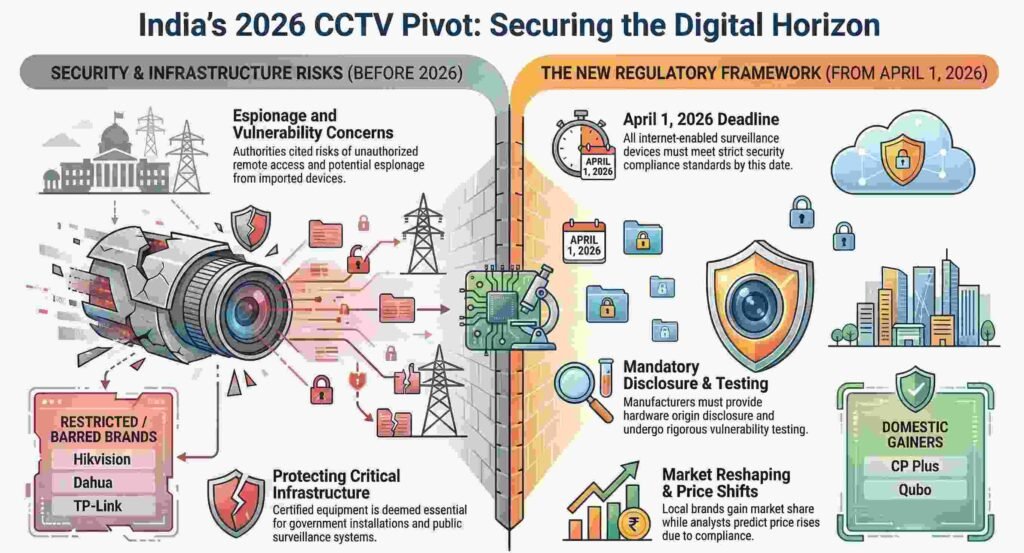
Following recent reporting from the Economic Times, the Indian government has issued a definitive answer. In a sweeping move to harden the nation’s digital borders, New Delhi has mandated a hard stop for uncertified, internet-connected CCTV cameras. By April 1, 2026, the era of unregulated, imported surveillance tech will officially come to a close. This isn’t just a policy tweak; it is a fundamental decoupling from the silicon upwards.
The 2026 Countdown for the “Untrusted” Giants
The April 1, 2026, deadline serves as a high-stakes countdown for some of the world’s most dominant hardware players. Specifically, the mandate takes aim at industry titans Hikvision, Dahua, and TP-Link. For these companies, the Indian market—one of the largest and fastest-growing in the world—is about to become significantly more hostile unless they can clear an exhaustive new certification hurdle.
While Hikvision and Dahua are enterprise and government-heavy giants often found in sensitive infrastructure, TP-Link is a staple of the average consumer’s living room. By targeting all three, the Indian government is signaling that the “trusted” status of a device is no longer assumed by its brand recognition. This regulatory pivot is a direct challenge to the current market dominance of these entities, shifting the landscape from a price-first ecosystem to one defined by national security imperatives.
Silicon Sovereignty: The Demand for Hardware Transparency
The new framework moves beyond the logo on the box and peers directly into the machine’s DNA. To remain on the shelves, manufacturers must now comply with “hardware origin disclosure” and rigorous “vulnerability testing.” In the world of high-stakes cybersecurity, this is a game-changer. It’s no longer enough to know where a camera was assembled; the state now wants to know the lineage of the System on a Chip (SoC), the sensors, and the firmware.
“Authorities cited growing concerns over potential vulnerabilities in surveillance infrastructure and the risks posed by imported devices.”
This focus on the hardware origin is designed to expose and eliminate “backdoors”—hidden entry points that allow for unauthorized remote access or state-sponsored espionage. For a Strategic Tech Policy Analyst, the “why” is clear: this is about protecting the state’s physical security backbone. When it comes to government installations and public infrastructure, a single compromised sensor is a liability the Indian state is no longer willing to tolerate.
The Economic Trade-off: Local Winners vs. Consumer Costs
As the gates close on uncertified imports, a new era of domestic manufacturing is being forced into the spotlight. Local players like CP Plus and Qubo are the immediate beneficiaries of this protectionist shift. Having already gained traction under earlier certification rounds, these brands are now positioned to dominate a market suddenly stripped of its low-cost Chinese competition.
However, this transition to a secure supply chain is not a free lunch. Market analysts are already sounding the alarm on a coming price hike. The reality of “trusted technology infrastructure” is that it is inherently more expensive to produce and certify than mass-market, unvetted alternatives. We are witnessing a fundamental tension between national security and consumer economics: the government is betting that a secure, sovereign supply chain is worth the “security tax” that citizens will eventually pay at the checkout counter.
A Sovereign Digital Future
India’s decision to unplug from uncertified surveillance by 2026 is a cornerstone of a much broader strategy involving data protection and digital sovereignty. By prioritizing certified devices, the country is attempting to insulate its most sensitive public and private spaces from external vulnerabilities and foreign influence.
As we approach this 2026 reset, the landscape of home and office security will look remarkably different—less globalized, more scrutinized, and significantly more expensive. It leaves the tech-forward citizen with a provocative choice to weigh: in an era of total connectivity, are you willing to pay a premium for a certified sense of privacy?
❓ తరచుగా అడిగే ప్రశ్నలు (FAQs)
ఈ వార్త లేదా కథనంలో ముఖ్యమైన అంశం ఏమిటి?
The Great Surveillance Reset: Why India is Unplugging Chinese CCTV Cameras by 2026 గురించిన పూర్తి సమాచారం మరియు తాజా ముఖ్యాంశాలు ఈ కథనంలో సమగ్రంగా వివరించబడ్డాయి.
ఈ తాజా పరిణామం ఎందుకు ప్రాధాన్యత సంతరించుకుంది?
ప్రజా ప్రయోజనాలు, సంబంధిత వర్గాలు మరియు ప్రస్తుత పరిస్థితుల దృష్ట్యా ఈ పరిణామం అత్యంత కీలకమైనదిగా మారింది.
ఈ అంశంపై అధికారిక వివరాలు మరియు తాజా అప్డేట్స్ ఎక్కడ తెలుసుకోవచ్చు?
సంబంధిత అధికారిక వర్గాలు వెల్లడించే తదుపరి సమాచారం మరియు ప్రత్యక్ష అప్డేట్స్ కోసం మా వెబ్సైట్ను నిరంతరం ఫాలో అవ్వండి.