1. Introduction: The Mission to the Impossible
For decades, the Sun’s outer atmosphere was a frontier beyond the reach of human technology—a place where the rules of physics seemed to bend. The Parker Solar Probe (PSP), launched in August 2018, has fundamentally changed that reality by becoming the first spacecraft to “directly sample” a star. By flying through the corona, the probe is navigating the most hostile environment in the solar system, enduring staggering speeds and thermal loads that would vaporize conventional hardware.
The mission is designed to answer the “enduring questions” of solar physics. To do so, engineers had to solve a remarkably relatable problem: how to keep a suite of sensitive electronics at room temperature while flying through a nuclear furnace. This survival is more than an engineering feat; it is the prerequisite for the groundbreaking science now rewriting our understanding of the heliosphere.
2. The 1,000,000-Degree Paradox
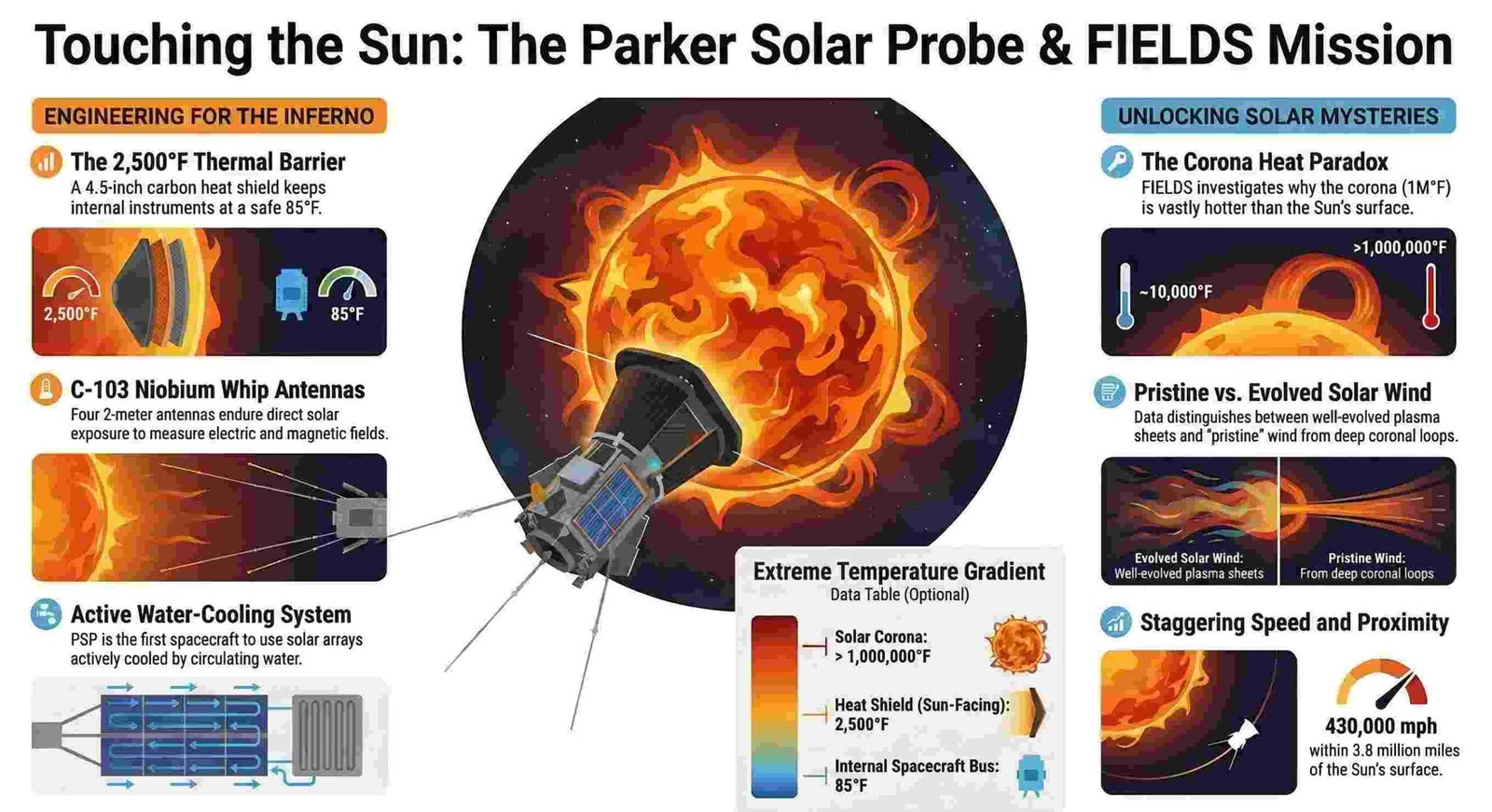
The primary scientific mystery the Parker Solar Probe aims to solve is a counter-intuitive temperature gradient that defies common logic. Typically, as you move away from a heat source, things get cooler. However, while the Sun’s visible surface (the photosphere) is roughly 10,000°F, the solar corona—its outer atmosphere—exceeds 1 million°F.
“FIELDS is planned to help answer [enduring] questions about the Sun, such as why the solar corona is so hot compared to the surface of the Sun and why the solar wind is so fast (a million miles per hour).” — FIELDS – Wikipedia
This “Temperature Paradox” suggests that the corona is being actively heated from the outside. The PSP is measuring this environment in situ to determine if the culprit is magnetic reconnection (the snapping and realigning of magnetic field lines) or wave-particle coupling (the transfer of energy from plasma waves to individual particles).
3. The Physics of the “Carbon Sandwich”
Protecting a spacecraft from 2,500°F requires the Thermal Protection System (TPS), a masterpiece of aerospace engineering. The TPS is essentially a “giant frisbee” that creates a shadow, or Umbra, in which the rest of the spacecraft hides.
The heat shield is constructed as a “sandwich panel,” including:
- Two outer face sheets: Made of carbon-carbon composite, a superheated version of the graphite found in high-end golf clubs.
- An inner core: Lightweight carbon foam that provides 4.5 inches of thermal insulation.
- A white surface coating: Developed in collaboration between the Lab and the Whiting School at Johns Hopkins, this coating reflects solar energy to prevent heat absorption.
The efficiency is staggering: while the Sun-facing side reaches 2,500°F, the interior bus remains a comfortable 85°F. This survival is possible because of the physics of heat transfer. While the corona’s temperature is millions of degrees, its density is incredibly low compared to the photosphere. It is similar to sticking a hand into a 400°F oven; as long as you do not touch the surfaces, your hand does not burn because the particles are dispersed. The TPS manages the actual heat transfer from these sparse, high-energy particles, allowing the probe to “touch” the Sun without melting.
4. Discovering the “Pristine” Solar Wind
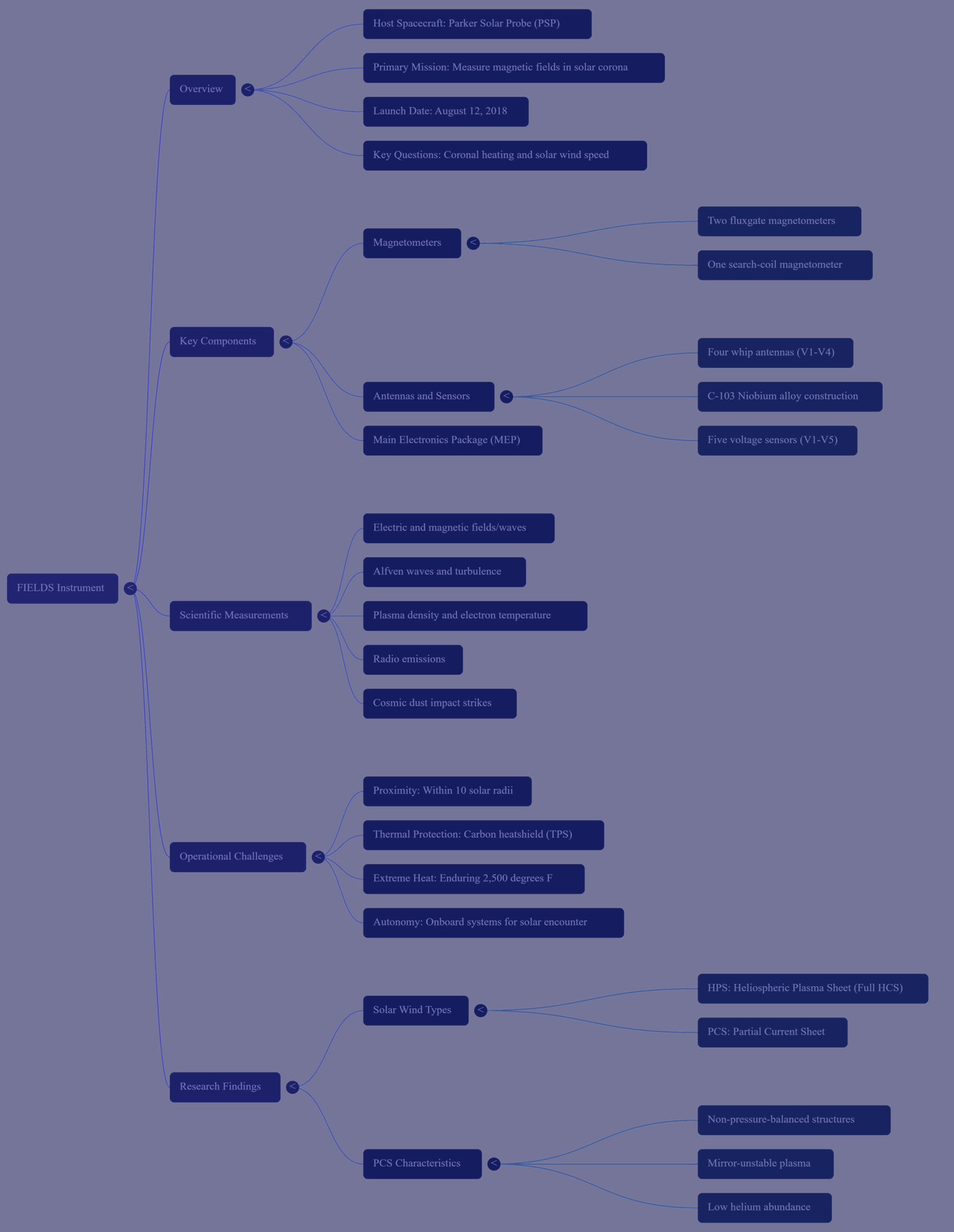
Surviving the corona’s heat has enabled the PSP to observe the solar wind in its “pristine” state before it is “washed out” by millions of miles of travel. At Earth (1 AU), we typically see the HPS (Heliospheric Plasma Sheet), a well-evolved wind that has reached a state of pressure balance.
Near the Sun, however, the probe has identified the PCS (Partial Current Sheet) wind. This wind is unique because:
- It is non-pressure-balanced, meaning it is still actively interacting and changing. The total pressure enhancement in the PCS is caused by “less reduced magnetic pressure” compared to the HPS.
- It originates from coronal loops deep inside the streamer belt.
- It is dominated by a very low helium abundance, a critical chemical marker that distinguishes it from wind originating in open field regions.
By identifying these PCS signatures, scientists can finally see the solar wind’s original kinetic properties before they are masked by the complex physics of the inner heliosphere.
5. A Spacecraft That Runs on Water
The probe’s cooling system is as innovative as its heat shield. Because the PSP operates within the final 5% of the distance between Earth and the Sun, standard solar arrays would melt. To prevent this, the probe features an actively water-cooled solar array system.
Actuator motors retract the arrays into the TPS’s shadow, leaving only the leading edges exposed to generate power. The system then circulates water through the arrays, transporting heat to radiators that dump the energy into the cold vacuum of deep space.
“Parker Solar Probe is the first spacecraft to use an actively water-cooled solar array system… [it] must rely on its own autonomous systems to keep the spacecraft and science instruments safe.” — Patrick Hill, Lead Engineer
During flybys, the Sun’s interference blocks communication with Earth. The probe relies on solar limb sensors—the “eyes” of the spacecraft—to detect if even a sliver of the bus is leaving the Umbra. If these sensors detect sunlight, the autonomous system uses reaction wheels to realign the probe instantly, ensuring the instruments stay protected.
6. Breaking the Speed Limit: A Million Miles Per Hour
To maintain an orbit this close to the Sun, the Parker Solar Probe must travel at velocities that dwarf any previous human-made object. During its record-breaking flybys, the probe reached speeds of 430,000 mph at a proximity of just 3.8 million miles (6.2 million kilometers) above the solar surface.
At this speed, you could travel from New York to Los Angeles in roughly 20 seconds. This extreme velocity allows the probe to “skim” the corona, gathering data from deep within the solar engine before swinging back into the safer reaches of the inner solar system.
7. Conclusion: Rewriting the Textbooks
The Parker Solar Probe’s mission will continue into the late 2020s, providing a front-row seat as the Sun enters its “solar maximum.” This phase of peak activity will see the probe flying through more frequent Coronal Mass Ejections (CMEs) and solar flares.
Understanding these events is vital for space weather protection. By providing the first in situ measurements of how stars function, the PSP is helping us safeguard the satellites, power grids, and communications we rely on every day. As we continue to dive into the corona during the Sun’s most volatile period, we are forced to ask: what other fundamental laws of the universe are waiting to be discovered as we finally touch the Sun?