
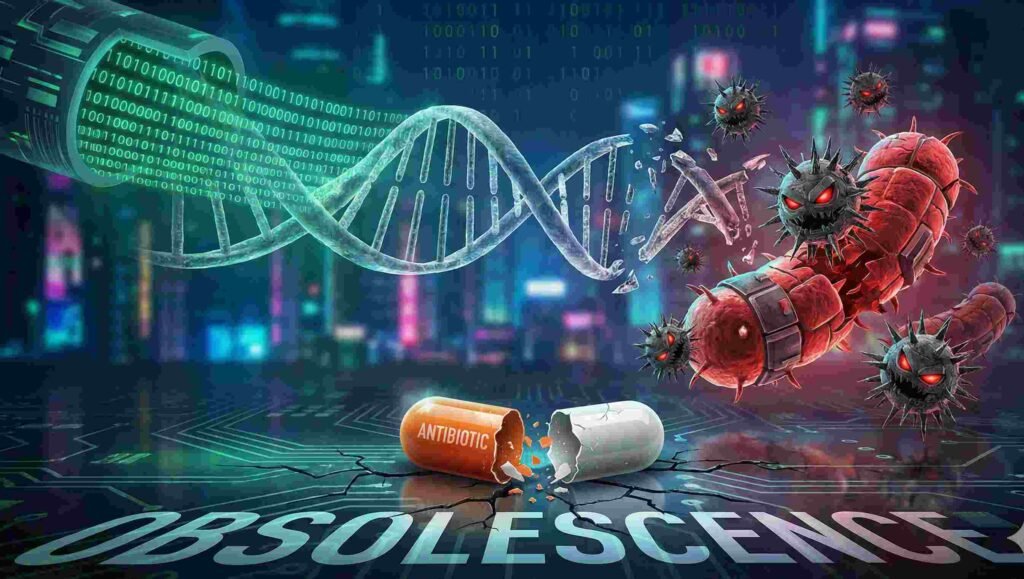
The modern medical landscape is confronting a silent but escalating crisis: the rise of “superbugs.” These multidrug-resistant pathogens have turned once-routine surgeries and common infections into high-stakes gambles, rendering our century-long reliance on traditional antibiotics increasingly obsolete. As these bacterial strains evolve faster than our ability to develop new chemical agents, the global health community stands at a critical crossroads, desperate for a paradigm shift in how we neutralize microscopic threats.
One potential solution is over a century old: bacteriophages. These are naturally occurring viruses that have evolved over eons to hunt and kill specific bacteria with surgical precision. While “phage therapy” has existed since the early 20th century, its adoption has been throttled by significant technical and logistical limitations. Historically, the process was one of stochastic discovery: researchers had to “hunt” for the right virus in nature—often in soil or sewage—and then navigate the laborious, often failed attempts to engineer these biological entities within the very pathogens they were meant to destroy.
However, a landmark breakthrough from New England Biolabs (NEB) and Yale University, recently detailed in the Proceedings of the National Academy of Sciences (PNAS), is fundamentally rewriting the rules of engagement. Scientists have successfully moved beyond hunting for physical viruses to building them entirely from digital code. By translating DNA sequences into functional, “bootable” viruses, researchers have unlocked the ability to “print” custom-designed predators, signaling a transition from accidental discovery to deterministic design in the war against antimicrobial resistance.
1: From Hunting in Nature to Designing on a Screen
The traditional approach to phage therapy was a logistical nightmare, relying on the collection and shipping of physical “isolates.” This new research marks a strategic pivot toward “sequence-based” engineering. By utilizing digital DNA sequence data, scientists no longer need a physical starter virus from the environment; they can design a bacteriophage’s entire genetic architecture on a computer screen.
This “digital-to-biological” leap is a game-changer for global health security because it effectively de-materializes the starting point of drug development. In a world where emerging bacterial threats can spread across borders in days, this method bypasses the geopolitics of physical sample sharing and the delays of international shipping. Instead, a laboratory in a crisis zone could simply download a viral “blueprint” and begin construction immediately, dramatically increasing the speed and democratization of therapeutic development.
“Even in the best of cases, bacteriophage engineering has been extremely labor-intensive. Researchers spent entire careers developing processes to engineer specific model bacteriophages in host bacteria,” reflects Andy Sikkema, co-first author and Research Scientist at NEB. “This synthetic method offers technological leaps in simplicity, safety and speed, paving the way for biological discoveries and therapeutic development.”
2: The “Lego” Method of Viral Assembly
At the technical core of this breakthrough is the High-Complexity Golden Gate Assembly (HC-GGA) platform. Unlike earlier synthetic methods that struggled to stitch together a few long, unwieldy strands of DNA, HC-GGA operates with the modular precision of a high-tech Lego set. In the team’s headline study, they successfully assembled the entire genome of a Pseudomonas aeruginosa phiKMV-like phage from 28 short, synthetic DNA fragments.
This modularity allows the platform to conquer “notorious hurdles” in synthetic biology. Many phage genomes are plagued by extreme GC content (high concentrations of guanine and cytosine bases) and highly repetitive sequences that typically cause assembly tools to fail. By breaking the genome into many small, manageable pieces, the HC-GGA method bypasses these complications with high fidelity.
The strategic advantages of utilizing shorter DNA fragments include:
- Reduced Toxicity: High concentrations of full-length viral genomes can be toxic to host cells during the engineering process; shorter fragments avoid this biological stress.
- Precision Preparation: Small synthetic segments are more stable and easier to manufacture without the errors common in longer sequences.
- High-Fidelity Assembly: Piecing together many small fragments with purified enzymes reduces the likelihood of genetic “typos,” ensuring the resulting virus is fully functional upon activation.
3: Programming New Behaviors with Precision
The HC-GGA platform allows for true “programming” rather than the mere copying of natural templates. Because the virus is built from the ground up, researchers can introduce point mutations, DNA insertions, and deletions at any specific coordinates within the genome. This converts the virus from a found object into a programmable biological tool.
The researchers demonstrated this precision through two high-impact modifications:
- Host Range Expansion (Tail Fiber Swapping): By specifically swapping the genes responsible for the virus’s “legs” (tail fibers), the team proved they could change which bacteria the virus targets. This allows for the engineering of phages that target a wider variety of resistant strains or, conversely, a more narrow range to protect a patient’s beneficial microbiome.
- Real-Time Visualization: The team inserted fluorescent reporters into the genome, allowing them to visualize the infection and destruction of the bacteria as it happened.
This ability to tailor a virus to a specific bacterial strain represents the arrival of a personalized viral pharmacopeia. Rather than relying on “broad-spectrum” antibiotics that act like a biological carpet-bomb, clinicians could eventually deploy a virus programmed for the exact “host range” of a specific patient’s infection.
4: A Safer, “Cell-Free” Construction Zone
Safety has long been a bottleneck in viral engineering. Traditional methods required researchers to grow and modify viruses inside the dangerous, disease-causing bacteria they were intended to kill—a process fraught with risk. The HC-GGA method revolutionizes this by moving the assembly process into a “cell-free” environment.
The synthetic genome is constructed in a test tube using purified enzymes, completely independent of any living cell. Only after the entire viral blueprint is fully assembled and verified is it “booted” or activated. This activation occurs by introducing the synthetic genome into a “safe laboratory strain” of bacteria that acts as a factory for the final virus. This approach is a significant safety breakthrough: it removes the need for scientists to handle large quantities of virulent human pathogens during the sensitive engineering phase, allowing for high-speed innovation in standard laboratory settings.
5: The “Weird Hammer” for Diverse Nails
The true power of this platform lies in its versatility across non-model organisms. Greg Lohman, Senior Principal Investigator at NEB, views the HC-GGA platform as a flexible toolkit for solving the most stubborn problems in microbiology.
“My lab builds ‘weird hammers’ and then looks for the right nails,” said Lohman. “In this case, the phage therapy community told us, ‘That’s exactly the hammer we’ve been waiting for.'”
The platform has already proven its ability to hit a diverse array of “nails” beyond P. aeruginosa:
- Targeting Mycobacterium: In a November 2025 PNAS study, the method was used in collaboration with the Hatfull Lab at the University of Pittsburgh and Ansa Biotechnologies to synthesize high-GC content Mycobacterium phages, which are notoriously difficult to engineer.
- Environmental Biosensors: A December 2025 study in ACS described how researchers from Cornell University utilized the platform to engineer E. coli phages that function as biosensors, capable of detecting contamination in drinking water with high sensitivity.
Conclusion: The Future of the Viral Pharmacopeia
The ability to build life from digital bits shifts the window of possibility for the future of medicine. We are exiting an era where we are limited by the biological tools we can find in nature and entering one where we can design the exact tools we need to survive the post-antibiotic age.
The stakes are global and immediate. Indian Prime Minister Narendra Modi and Dr. Neeraj Nischal have recently warned that antibiotic misuse is placing the world at a “critical crossroads” where untreatable infections could once again become the norm. The synthetic bacteriophage platform offers a technological exit ramp from this crisis.
As we look toward the next decade of innovation, we must ask: Are we ready for a healthcare system where the “pharmacy” is a DNA printer? In the future, when you present with a resistant infection, your doctor may not reach for a generic pill from a bottle, but instead download and print a custom-coded viral cure designed specifically for you.